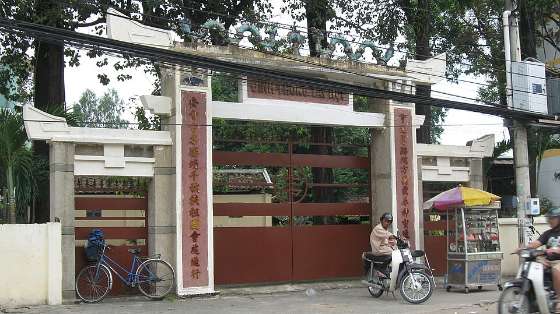
An ancient communal house of Go Vap with a "trung thiem diep oc" main hall, a National Architectural and Artistic Relic
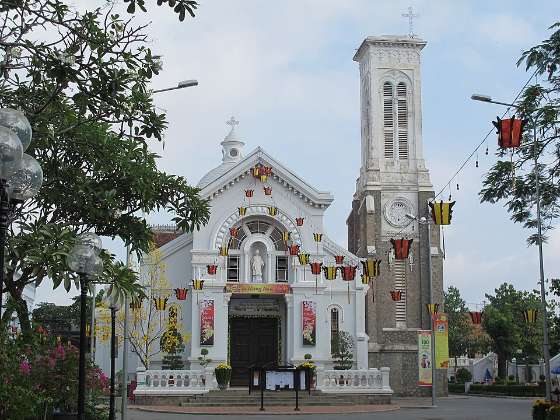
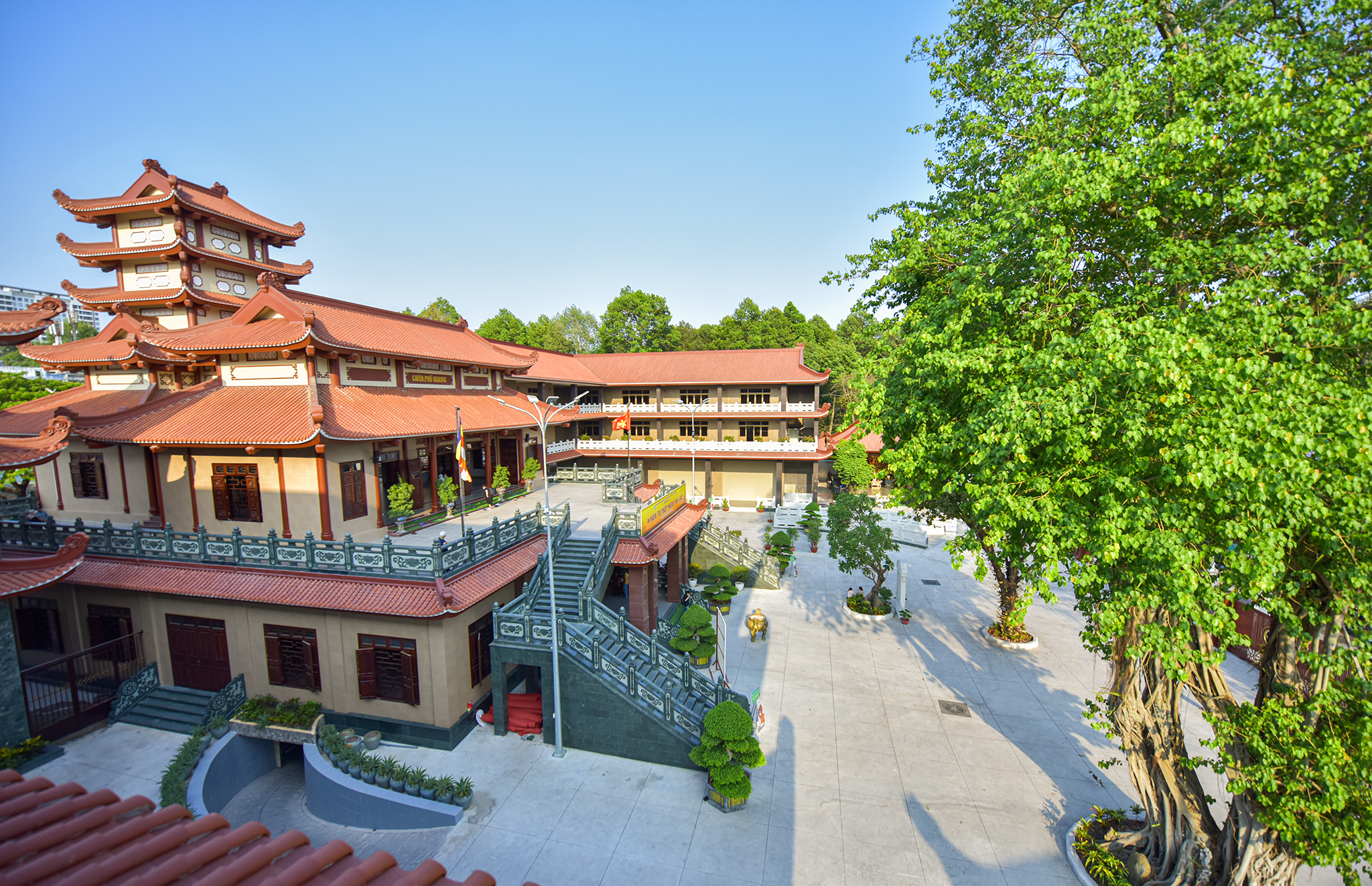
On Thong Nhat Street, Thong Tay Hoi Communal House is introduced in the city's tourism publications as "the oldest communal house in the land of Gia Dinh". According to these publications, it was built around 1698 in Hanh Thong village by migrants from Central Vietnam who came to clear the land. In 1944, the two villages of Hanh Thong Tay and An Hoi merged, and the communal house became their shared place of worship, taking the name Thong Tay Hoi. Through two major restorations in 1896 and 1927, it has kept almost intact the structure and materials of an ancient Southern communal house of the 18th – 19th centuries. In 1998, it was classified as a National Architectural and Artistic Relic. The communal house is laid out in the shape of the character "dinh" (丁) with two parallel axes: the main axis comprises the vo ca (front hall), front hall, middle hall and main hall; the secondary axis is the Assembly House. Its most distinctive feature is the main hall: two four-pillar buildings with overlapping roofs in the "trung thiem diep oc" style, topped by a green-glazed ceramic "two dragons vying for a pearl" figure. In front of the main hall are three square wooden altar tables with curved legs inlaid with mother-of-pearl birds and flowers; in the middle is the altar of the Guardian Spirit Thanh Hoang Bon Canh (made in 1927), carved with dragons facing the sun, and the deity's shrine is carved with the "two dragons paying homage to the moon" motif. The communal house preserves many horizontal plaques and parallel sentences in Chinese characters dating from 1881 – 1906, including some of the most representative among the city's architectural and artistic relics, such as "Kinh nhu tai" (1881) and "Chung linh duc tu" (1906) in the main hall, and "Quoc thai dan an" and "An quang pho chieu" (1931) in the Ba Chua Xu shrine. The principal deities worshipped are Dong Chinh Vuong and Duc Thanh Vuong, two princes, sons of Emperor Ly Thai To. The Ky Yen festival (prayer for peace) takes place on the 14th and 15th days of the 8th lunar month, with rituals of opening the gates, presenting offerings, praying for peace and the main ceremony. The communal house is part of the "Vong quanh Go Vap voi nhung dieu co xua va hap dan" (Around Go Vap: Ancient and Fascinating) tour programme, together with Phu Chau Ancient Temple and Hanh Thong Tay Church.
English text: machine translation from the Localis platform — proper names kept in Vietnamese.Good to know
Best time to visitYear-round; festive during the Ky Yen festival (14th – 15th day of the 8th lunar month)
Services
- Tour the main hall in the "trung thiem diep oc" (layered-roof) style
- See ancient horizontal lacquered boards, parallel sentences and mother-of-pearl inlaid wooden altars
- Attend the Ky Yen ceremony on the 14th–15th days of the 8th lunar month
- Combine with Phu Chau Ancient Temple and Hanh Thong Tay Church













 Localis