


The "Ba Dam Pagoda" on Phan Xich Long Street, a City-level historical relic linked to two periods of resistance
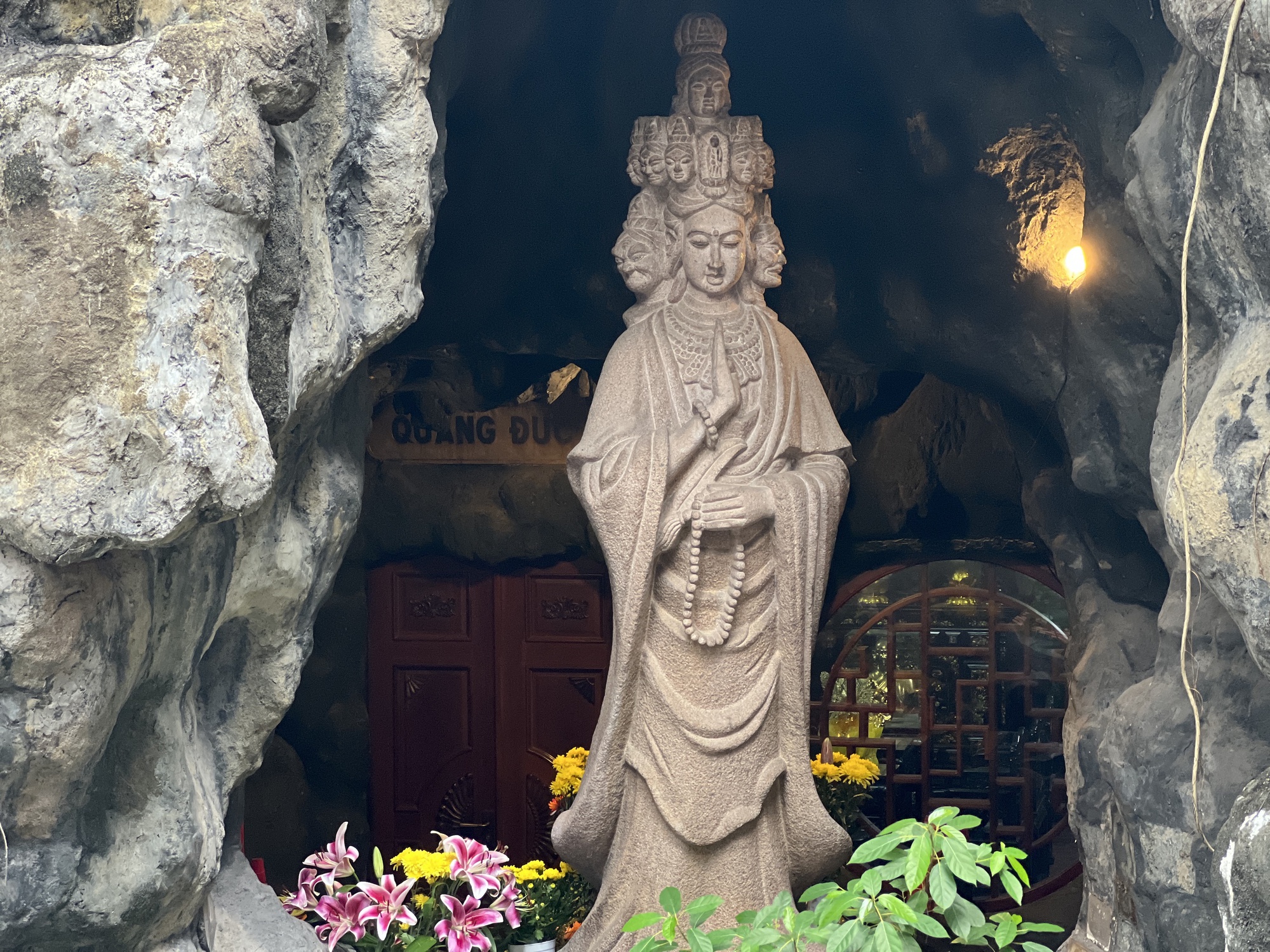
Phu Nhuan locals know this as Ba Dam Pagoda (the "French Lady's Pagoda"). It was founded during the French colonial period by Mrs. Ly Thi Ly, wife of a French civil servant – hence the popular name; the pagoda is also known as Ly Duong Sanh Tu. Its first abbot was Most Venerable Thich Thien Tong. In 1941, Most Venerable Thich Thien Tong joined revolutionary activities with the Vanguard Youth, a resistance militia led by Pham Ngoc Thach; when this was discovered, the pagoda was burned down. In 1942, Mrs. Ly had a new pagoda built and invited Nun Thich Nu Nhu Duc (born Ho Thi An) to serve as abbess. Here, the nun and Mrs. Thai Thi Nhan, President of the Saigon – Cho Lon Women's National Salvation Association, distributed leaflets explaining the Preliminary Agreement of 6/3/1946 and mobilised the public to help supply troops at the An Phu Dong and Bung Sau Xa bases. During the resistance against the Americans, the pagoda gathered Buddhists and patriotic citizens taking part in the Saigon Buddhist struggle movement of 1963; the lecture hall behind the Ancestral Hall was where plans for that summer's street protests were discussed. The pagoda was also a liaison station escorting cadres out to the liberated zones and receiving them back into the inner city. In 2007, the pagoda was classified as a City-level Historical Relic. Today's architecture differs from the original. The main hall has three bays with two rows of stone columns, a tiled roof and eaves decorated with blue-glazed ceramics. The central bay enshrines Shakyamuni Buddha, Ananda, Kassapa, Avalokiteshvara Bodhisattva and the Infant Shakyamuni; the side bays enshrine Avalokiteshvara of the Southern Sea, Ksitigarbha Bodhisattva and an altar to heroes and martyrs. Not far from the pagoda, at No. 49 on the same Phan Xich Long Street, is the Ly Family Tomb Complex, the resting place of Mrs. Ly Chanh Tu and Mrs. Ly Thi Ly, with two stone tombs – one tower-shaped and one stepped rectangular – typical of ancient Southern Vietnamese tombs and dating from around the late 19th century.
English text: machine translation from the Localis platform — proper names kept in Vietnamese.Good to know
Best time to visitYear-round
Services
- Visit the three-bay main hall with its blue-glazed ceramic eaves
- Hear the story of the pagoda through two periods of resistance
- Stop by the late-19th-century Ly Family Tomb Complex on Phan Xich Long Street
















 Localis