


Heritage · Vinh Loc
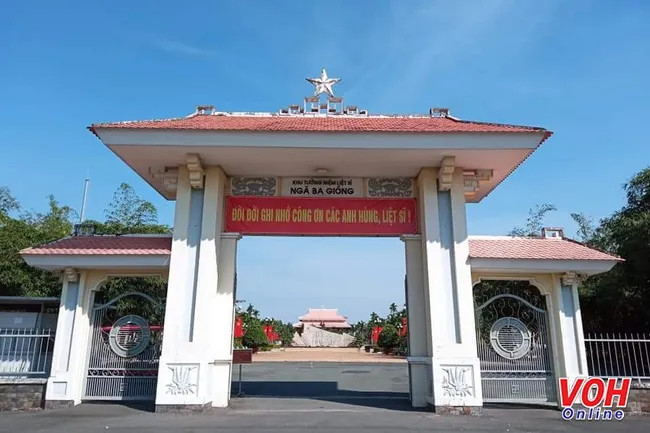
Mau Than 1968 Frontline Civilian Workers Relic Site
Khu di tich Dan cong hoa tuyen Mau Than 1968
A memorial to the fighters of the Southern Uprising in the land of Hoc Mon's 18 betel-garden hamlets
Nga Ba Giong, also called Nga Ba Bang Lang because of the many crape myrtle (bang lang) trees planted here, is a raised plot of more than 2,300 m², bordered by three roads, Phan Van Hon, Nguyen Van Bua and Provincial Road 9, in the land of Hoc Mon's 18 betel-garden hamlets. The site is associated with the Southern Uprising (Nam Ky Khoi nghia) and commemorates those who gave their lives for independence and freedom. In 2002, Nga Ba Giong was recognised as a National Historical Relic. Although the Southern Uprising did not succeed, it is regarded as the opening shot heralding the victory of the August Revolution of 1945, five years later. In the same period, Hoc Mon had two other sites linked to the uprising's leaders: Nga Tu Gieng Nuoc (now Hoc Mon General Hospital), associated with Ha Huy Tap, Vo Van Tan, Nguyen Huu Tien and Nguyen Thi Minh Khai; and the area near the theatre, associated with Pham Van Xung and Dang Cong Binh. After 1975, the site was cleared and restored; in 1980, Hoc Mon District replanned the entire relic area. About 300 m from the site is a heritage house displaying photographs and documents on the Southern Uprising period. Every year on major holidays, the City Youth Union often holds campfire nights here to recall revolutionary traditions; the site is also the starting point of the tourism product "Ve Hoc Mon tu hao lich su Muoi tam thon vuon trau" (To Hoc Mon, Proud History of the Eighteen Betel-Garden Hamlets). Today, visitors pay their respects at the Nga Ba Giong Martyrs' Memorial; in 2023, the City Department of Tourism recognised it as a tourist site.
English text: machine translation from the Localis platform — proper names kept in Vietnamese.Good to know
Best time to visitYear-round; commemorative activities on the anniversary of the Southern Uprising
Services
- Offer incense at the memorial
- Visit the heritage house on the Southern Uprising
- Combine with Hoc Mon's "Muoi tam thon vuon trau" route
















 Localis