

A pagoda over a century old amid the waterways of Nha Be, still bearing traces of a secret tunnel beneath its altar
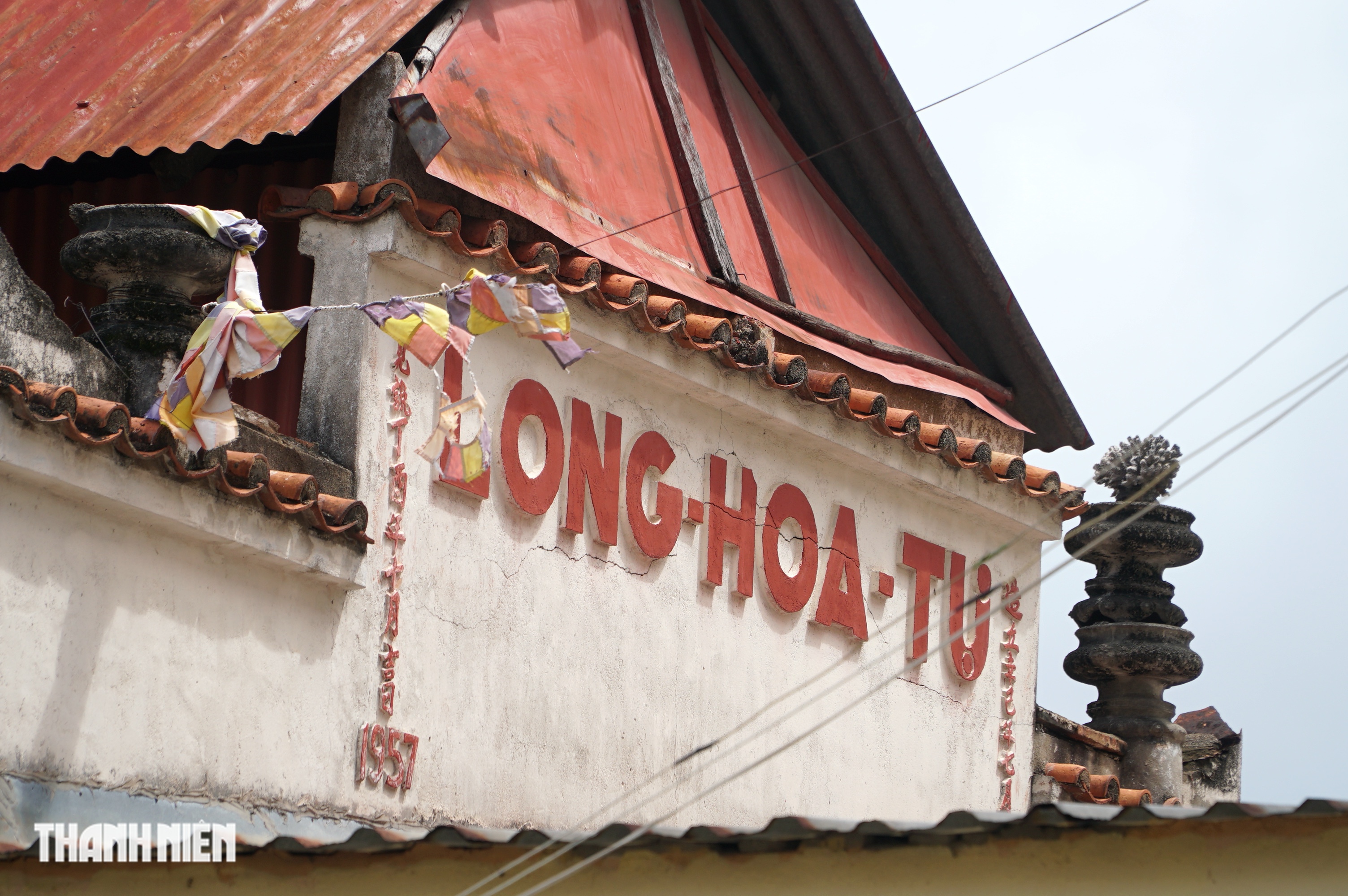
Long Hoa Pagoda began as a small hermitage. In 1902 it was expanded using light, rudimentary materials – plank walls and a thatched roof. In 1957 the pagoda was rebuilt and renovated on a large scale, with a simple design like an ordinary house, brick walls and a corrugated metal roof. That year, 1957, is still moulded in relief on the gable of the old main hall, beneath the three characters "Long-Hoa-Tu". In 2014, the pagoda was classified as a City-level Historical Relic. The first abbot was Most Venerable Thich Duc Long, lay name Pham Trung Tuyen, born in 1906 in Cai Be district, Dinh Tuong province, now part of Tien Giang. In 1954 he came to the Nha Be area and practised at the pagoda. From 1965, the pagoda became a revolutionary base of the Nha Be District Party Committee, sheltering cadres and serving as a liaison point for local guerrilla forces; the location was then very secluded, surrounded by a dense network of canals and thick forest. The pagoda has two secret tunnels dug by the Most Venerable himself together with District Party Committee cadres. One lies beneath the statue of Maitreya Buddha, about 5 metres from the left wall of the old main hall; it has since been filled in, with only traces of the entrance remaining. The other lies beneath the Shakyamuni Buddha altar in the old main hall; its traces remain almost intact and it falls within protection zone 1 of the relic. After Most Venerable Thich Duc Long passed away in 1980, the pagoda was without an abbot for a long time and fell into disrepair. In 1986 it was placed under the management of the Buddhist Sangha of Nha Be district, with Most Venerable Thich Vien Giac as abbot; he built the new main hall of Long Hoa Pagoda in 1997 and founded a school caring for orphaned children. The grounds feature a Three-Entrance Gate and a Dragon Courtyard leading to the new main hall; to the right are the Long Hoa Co Tu main hall and the orphanage school. The old main hall still preserves a Shakyamuni Buddha statue, an Amitabha Triad, five Arhat statues in glass cases mounted on both side walls, a statue of Patriarch Bodhidharma and a statue of Ksitigarbha Bodhisattva riding a blue lion. The pagoda's orphanage school was founded in 1995 and takes in children aged 4 to 10. In 2000 the pagoda also opened a charitable traditional medicine clinic. Every year, the Executive Board of the Vietnam Buddhist Sangha of District 7 holds the Great Vesak Ceremony here.
English text: machine translation from the Localis platform — proper names kept in Vietnamese.Good to know
Best time to visitYear-round; the Great Vesak Ceremony is held at the pagoda on the full moon of the 4th lunar month
Services
- See the traces of the secret tunnel beneath the altar in the old main hall
- See the Long Hoa Co Tu main hall with its gable dated 1957
- See the Amitabha Triad and five Arhat statues in glass cases
- Walk from the Three-Entrance Gate across the Dragon Courtyard to the new main hall
- Include in a sightseeing programme of former District 7














 Localis