



Food culture · Cho Lon
Kho qua Ca Chon
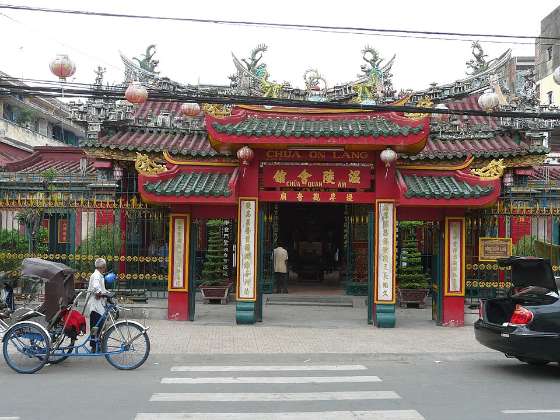
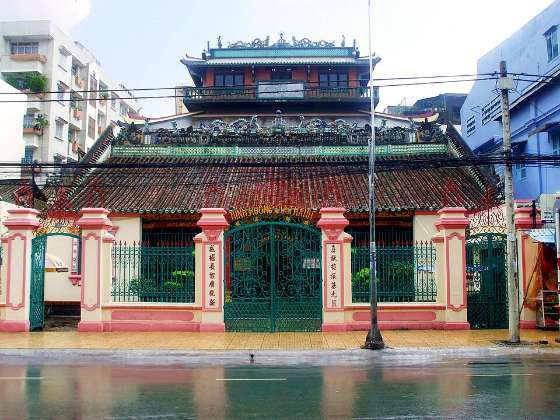
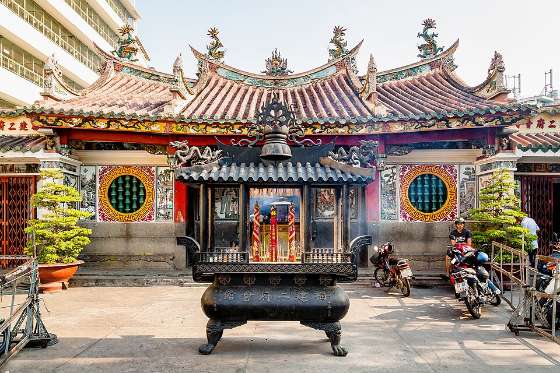
The Fujianese Quan Am Pagoda on Lao Tu Street, with tubular-tiled roofs and gilded floral-carved doors
On narrow Lao Tu Street in the heart of Cho Lon, behind a red-painted three-entrance gate hung with lanterns, stands On Lang Assembly Hall, also known as On Lang Pagoda, Quan Am Pagoda or Quan Am Temple. The gate sign reads "CHUA ON LANG", and the horizontal plaque reads "溫陵會館" (On Lang hoi quan) along with the words "CHUA QUAN AM". The assembly hall was built in the second half of the 18th century and is one of the nine Chinese assembly halls in the former District 5; in 2002, it was classified as a National Architectural and Artistic Relic. The pagoda's architecture is influenced by ancient Chinese temples, especially in the shaping and decoration of its roof, whose tubular tiles are distinctly Fujianese in style. The front doors are adorned with gilded floral carvings and raised reliefs. The assembly hall has undergone many restorations, most recently in 2017. Like other assembly halls, On Lang is both a place of worship and a place where the community gathers, discusses business and preserves its traditions. During the Chinese community's Lantern Festival (Nguyen Tieu), On Lang is one of the assembly halls where rituals take place.
English text: machine translation from the Localis platform — proper names kept in Vietnamese.Good to know
Best time to visitYear-round; festive around the full moon of the 1st lunar month
Services
- Admire the Fujianese-style tubular-tiled roof and gilded floral-carved doors
- Visit Quan Am Pagoda through the red-painted three-entrance gate
- Combine with a route of Chinese assembly halls around Cho Lon














 Localis