


An early 19th-century tomb in Phu Nhuan, built in 1802 by decree of Emperor Gia Long to honour Vo Tanh
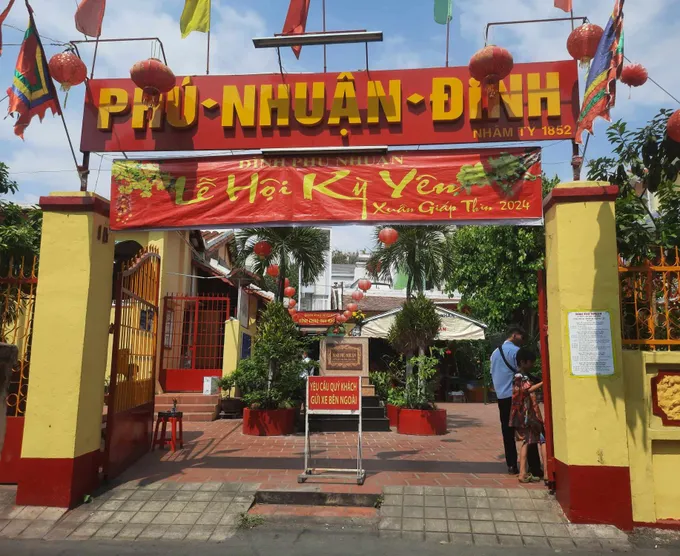
Vo Tanh Mausoleum is a structure that strongly embodies the ancient Southern tomb architecture of the early 19th century, right in the middle of the former Phu Nhuan District. In 1802, at the request of the people of Gia Dinh, Emperor Gia Long issued a decree to build a shrine and tomb for Vo Tanh in Phu Nhuan hamlet so that people from near and far could conveniently pay their respects. The three-entrance gate was added in 1951; in 2006 – 2007, the shrine and tomb were restored and the grounds replanned. On 30 December 2019, the mausoleum was classified as a City-level Architectural and Artistic Relic, and from June 2020 it officially opened to visitors. Vo Tanh was originally from Phuoc An District, Bien Hoa Citadel, and later moved to Binh Duong District in Phien Tran (now Ho Chi Minh City). Before he was 20, he had recruited volunteers to form the Kien Hoa army (present-day Go Cong); from 1788 he followed Nguyen Anh, in 1799 he was entrusted with defending Binh Dinh Citadel, and he died in 1801 when he was just over 30. Emperor Gia Long posthumously conferred on him the title of Duke (Quan Cong); under Emperor Minh Mang he was posthumously titled Hoai Quoc Cong, so later generations came to call him Vo Quoc Cong. The mausoleum is built of mortar compound and brick, mainly o duoc mortar; the tomb is 16 m long, up to 12 m wide and about 3 m at its highest, with all the components of an ancient tomb: front screen wall, gate pillars, worship courtyard, altar, burial mound, rear screen wall and enclosing wall. The whole complex is solidly built, unfussy, with straight, right-angled lines. Its highlight is the rear screen wall, decorated in relief with a bird flying amid swirling clouds, while both sides of the rear wall bear stylised dragons in deep, sharp yet graceful relief. The Vo Tanh shrine is built in the style of a Southern village communal house and preserves valuable horizontal plaques, parallel sentences and carved wooden screens; surrounding the shrine and tomb is a spacious, airy garden with many flowers and ornamental plants. The mausoleum is part of the "Mot vong Phu Nhuan, cam nhan binh yen noi do thi nhon nhip" (Around Phu Nhuan: Finding Peace in the Bustling City) programme, and is easy to combine with Phu Nhuan Communal House and the Phan Xich Long food street.
English text: machine translation from the Localis platform — proper names kept in Vietnamese.Good to know
Best time to visitYear-round
Services
- Visit an ancient early 19th-century Southern-style tomb
- Pay respects at the Vo Tanh shrine
- Combine with the "Mot vong Phu Nhuan" route and Phu Nhuan Communal House















 Localis